The Protective Instinct: Retraining the Brain for Putting Success
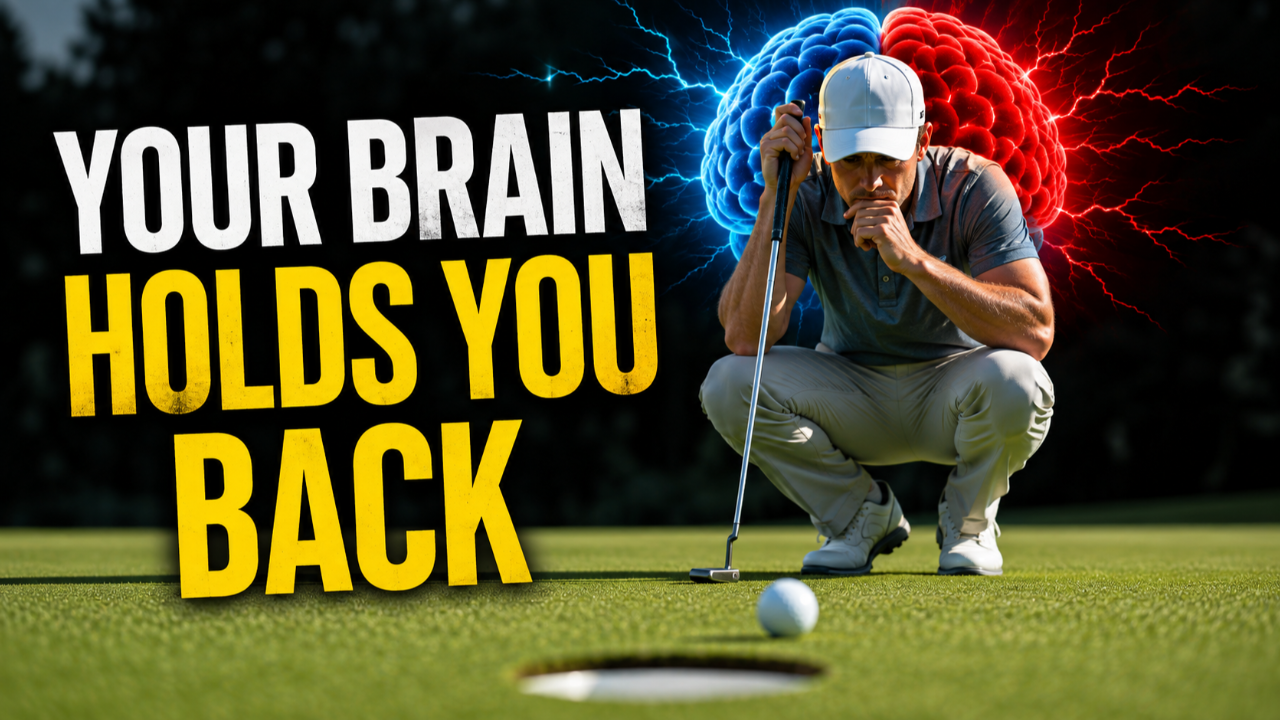
The Science of the "Protective Instinct" in Putting
1. The Invisible Opponent: Why We Under-Deliver Energy
2. Evolution vs. Performance: The Science of Survival
- A backswing that is 1–2 centimeters shorter than intended.
- A slower, "safer" transition at the top of the stroke.
- A cautious reduction in acceleration through the impact zone.
3. The Psychology of "Short vs. Long": The Comfort Trap
4. Common Mistakes: Avoidance Goals vs. Performance Goals
- Mistake #1: "Just Hit It Harder" – This creates a direct conflict between the conscious mind and the nervous system. The result is "active hands," increased muscle tension, and a collapse of rhythm.
- Mistake #2: Over-Analyzing Mechanics – Golfers often try to fix a "broken stroke" when the mechanics are actually sound. The issue is a lack of neurological trust, not a faulty pendulum.
- Tightening the grip just before or during the transition.
- A slower transition at the top of the stroke as the brain "re-checks" the energy requirement.
- Guiding the putter through impact rather than allowing the momentum to flow.
5. Coaching Recommendations: The Diagnostic Shift
- The Diagnostic Question: When a player leaves a putt short, do not lead with technical feedback. Ask: "Did your movement become smaller because it felt safer?" This forces the player to acknowledge the internal negotiation between caution and commitment.
- The Core Putt as a Retraining Tool: Use the "Core Putt"—a balanced movement with stable rhythm—in a zero-pressure environment. This allows the brain to build a motor blueprint where larger, athletic movements are associated with safety and success.
- Pressure Training: Introduce challenges that force the brain to choose commitment under stress. For example, drills where every ball must finish 30cm to 60cm past the hole. This teaches the brain that reaching the target is the only "safe" outcome.
- Process-Based Feedback: Reinforce the quality of the movement over the result. Ask:
- Did you commit fully to the movement?
- Did you maintain a stable rhythm?
- Did you produce the intended Target Speed?
- Was the stroke free and athletic?
6. Key Takeaways: The Puttalyze Principles
- Puttalyze Principle #19: The brain naturally chooses safety over performance. Elite putting begins when the brain learns that confident movement is also safe.
- Principle #20: The Protective Instinct cannot be eliminated. It can only be retrained through repeated experiences that prove committed movement is successful.
- Principle #23: Elite putting begins when the brain no longer protects against failure but confidently commits to success. Trust—not force—is the final step toward instinctive distance control.
- The Nervous System is Conservative: If uncertainty exists, the brain will always select the movement requiring less energy and perceived risk.
- Avoidance vs. Performance: Movement efficiency drops when the brain focuses on "not missing long." High-level performance requires a singular focus on the Target Speed.
7. Conclusion: From Caution to Commitment
Mandatory Call-to-Action If you enjoyed this article, please subscribe to our channel and follow our work. Your support helps us continue producing evidence-based golf education. If there is a specific golf topic you would like us to investigate, test, or explain, leave a comment, contact us on LinkedIn, or send us an email. Our team regularly researches new questions submitted by golfers and coaches around the world. To further improve your putting performance, explore our 30-Day Puttalyze Green Reading & Putting Certification Course, where you'll master green reading, speed and distance control, setup, alignment, aim, stroke mechanics, and a structured system for reading greens and holing more putts.
Lerne es in der Puttalyze Academy
- Mentales PuttenProtective Instinct und entschlossenes PuttenErkenne vorsichtiges Verhalten als mögliche Beobachtung, ohne jedem kurzen Ball eine mentale Ursache zuzuschreiben.
- Längenkontrolle · ÜbungÜbung 3 – Etwas weiter als das BauchgefühlBleibe bei den beiden Zielpunkten.
7 Tage kostenlos · danach 49 € pro Jahr · keine automatische Abbuchung
Zuerst erschienen im eCoach360°-Blog: www.ecoach360.com/blog/why-your-brain-makes-you-leave-putts-short
Mehr zu diesem Thema
Why Everything You Know About Reading Putts Might Be Wrong: 5 Scientific Takeaways From the Puttalyze Method
Discover the science of putting with Puttalyze. Learn how Aim Point, Distance Point, and 3 RPS arrival speed improve green reading, accuracy, and distance control.
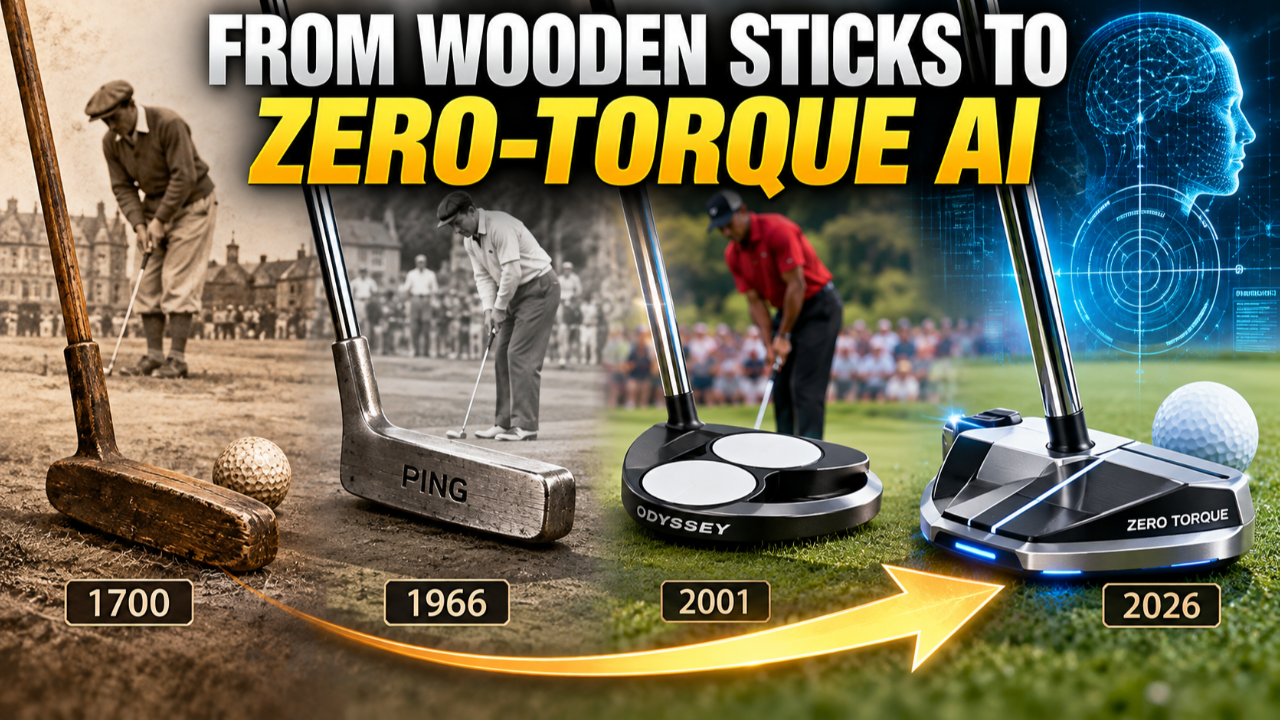
From Wooden Sticks to Zero-Torque AI Systems: The Wild, Experimental Evolution of the Golf Putter
Explore the evolution of golf putters, from wooden clubs to AI-powered Zero-Torque technology, and discover the innovations shaping the future of putting.
The Puttalyze System: Integrating Science for Elite Distance Control
Discover the science behind elite putting with the Puttalyze Integrated Performance System. Learn how target speed, distance control, rhythm, biomechanics, neuroscience, green reading, and …